I Love My Clean Code: Graphics & T-Shirt Designs
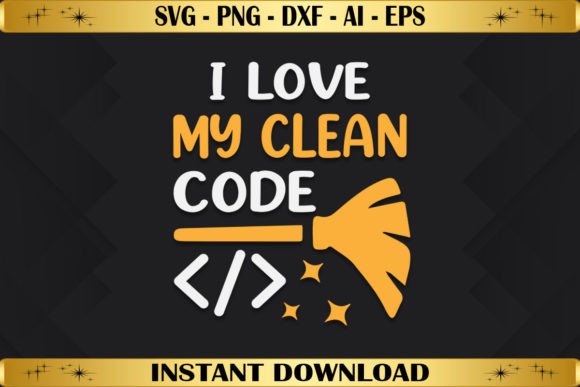
Opening a freshly downloaded zip folder never gets old, especially when the asset inside can anchor an entire product line. The moment I unzipped I Love My Clean Code, I could already picture it on a slate-gray unisex tee, heat-pressed onto a matte black mug, and scaled down into a glossy planner sticker. The typography is crisp, a bold monoline sans-serif statement with a tiny heart glyph tucked between the words. It feels modern, slightly nerdy, and wonderfully uncluttered—exactly the kind of graphic design asset that appeals to software developers, coding bootcamp grads, IT professionals, and anyone who has ever wrestled with messy code and won.
This isn’t a trendy ephemeral phrase. Clean code is a point of pride, and that pride translates into loyal customers. I knew immediately this SVG design would resonate with buyers who want witty, wearable tech humor that doesn’t scream. The mood is minimalist, confident, and a little playful—perfect for a sophisticated sticker on a laptop lid or a simple centered print on a unisex pullover. If you sell in the developer gift niche, this file is a quiet powerhouse.
Why This Design Is a Quiet Workhorse for Handmade Sellers
Most crafters chase seasonal trends, but tech-themed products sell year-round. Birthdays, graduation, hackathons, new job celebrations, remote work anniversaries—developers have milestones too. I Love My Clean Code fits into that evergreen demand effortlessly. The message is personal without being overly sentimental, and the layout is clean enough that even a first-time sublimation user can get a professional result. For Etsy sellers, this design fills a gap between overly cartoonish programmer jokes and corporate-looking tech merchandise. It walks a line that feels handmade but polished.
As a small business owner, I’m always thinking about how a single PNG design or SVG design can spawn multiple products. This one does it. You could build an entire “Clean Code” collection around it, adding matching badges, companion sayings, or even color variants. The included file types—SVG, PNG, DXF, AI, EPS—mean you aren’t locked into one software or one production method. That flexibility alone saves hours of reformatting when a customer asks for a slightly different product.
The Real Product Line That Unfolded in My Head
Within five minutes of inspecting the files, I had mapped out eight products. Here’s what I saw:
- Unisex t-shirts – Printed with the design centered on a soft cotton tee in heather gray, navy, or charcoal. The high-contrast white or light ink makes the text pop while keeping the minimalist vibe.
- Sublimation mugs – The design placed on both sides of an 11oz or 15oz mug. No wrap distortion because the layout is compact and linear.
- Die-cut stickers – Using the SVG with a small offset contour, this becomes a perfect weatherproof sticker for laptops, water bottles, and toolboxes.
- Tote bags – A simple tote with the phrase in the corner or centered feels like a subtle inside joke at tech meetups.
- Glossy planner stickers – The PNG scaled down to 1.5 inches wide for planner boxes or habit trackers in coding-themed journals.
- Tumbler wraps – For skinny tumblers, the horizontal orientation works well without splitting text oddly.
- Greeting cards – Printed on textured cardstock, paired with a kraft envelope, it becomes a congratulations card for a new developer job.
- Printable wall art – The high-resolution PNG printed at 8x10 inches, framed simply for a home office gallery wall.
All of these are achievable with a standard desktop cutter, a sublimation printer, or even a good home laser printer. The printable design nature of the PNG makes it effortless to prototype without wasting material.
Unpacking the Zip: File Quality and First Tests
The compressed folder holds exactly what a digital product creator needs: an SVG with clean, single-layer paths, a transparent-background PNG at 300dpi, an editable AI and EPS for those who fine-tune in Illustrator, and a DXF that opens reliably in Silhouette Studio Basic when you need to share with customers who don’t use advanced software. I tested the SVG in Cricut Design Space and had zero issues with open paths or stray nodes. The design auto-welded correctly, and the cut preview showed crisp edges. No messy overlapping shapes to clean up—this is a commercial design that respects your time.
The PNG transparency was flawless. When I placed it over a dark mockup, the white text had no halo or jagged edges. That’s essential for sublimation, where any fuzziness around the edges shows up dramatically. I also resized the design aggressively—from a 12-inch t-shirt print down to a 1-inch sticker—and the legibility held up surprisingly well. The monoline style helps; thin enough to feel modern, thick enough to survive weeding without tearing.
Practical Crafting Notes: What to Watch Before You Commit
No design is perfect for every scenario, and I Love My Clean Code is no exception. Here’s what I noted during my test runs:
- Small weeding hurdles – The heart symbol and the lowercase ‘e’ counters are small. At sizes below 1.5 inches wide, heat transfer vinyl can become fiddly. Test on scrap and consider a slightly larger minimum size for your listings.
- Color contrast awareness – The design ships as a dark single-color file. If you plan to use it on black fabric with white vinyl, it’s perfect. But if you flip it to a light-colored design on a pastel shirt, double-check how thin the strokes read from a distance.
- Multi-layer caution – This design works best as a single-color layer. Adding a shadow or offset is fine, but stacking multiple vinyl colors on the tiny heart will test your patience. I recommend one-color application for smooth production.
- Sublimation color profiling – If you’re printing on mugs, the crisp black text can look muted if your ICC profile isn’t dialed in. Always test a cheap mug first before committing to a wholesale batch.
- Screen-print legibility – For those using screen-printed transfers, the fine lines might close up if the mesh count is too low. Stick with transfers rated for fine detail.
These aren’t dealbreakers—just the kind of practical, hands-on notes that come from running a handmade business rather than just downloading files. If you sell finished products, always test one item before listing.
Styling Prompts and Font Pairing Magic
The typography in this graphic design asset stands strong on its own, but you can stretch it creatively. For customer orders that ask for a name, date, or custom line, I found that a light script font placed underneath adds a lovely contrast. Think “Clean Code Since 2019” in a delicate handwritten style. For a slightly bolder look, pair it with a condensed sans serif secondary line. That versatility turns this single-file purchase into a design bundle starter kit.
When building product mockups, I recommend showing the design on varied backgrounds: a white shirt, a dark heather gray, a kraft tag, a clear sticker on a metallic surface. This helps online shoppers imagine it in their own lives. If you sell on Etsy or a creative marketplace, listing multiple color variations of the same phrase using the PNG makes your shop look cohesive and full, even if the core design remains the same.
Building a Themed Collection That Sells Itself
One phrase alone is a product; a collection is a brand. With I Love My Clean Code as the hero piece, you can easily develop a mini-series. Design complementary assets like “Code. Coffee. Repeat.” or “Debugging Is My Cardio” in a matching style, and suddenly you have a bundle listing, a sticker pack, or a set of printable tags. The DXF file format means you can even create matching party decorations for a coder’s birthday bash—think cake toppers and cupcake wrappers.
For craft fair sellers, having a cohesive “Developer Life” section draws a crowd. People smile when they recognize their own habits in your products. This kind of niche marketing builds repeat customers and word-of-mouth referrals, especially in tight-knit tech communities.
Licensing and Business Considerations
Before you list anything, confirm that the included commercial license covers physical end products for sale. Most graphics in the T-Shirt Designs category do, but always read the terms. If you plan to use the design on print-on-demand platforms, verify that the license permits third-party printing. The zip folder includes high-quality files suitable for professional production, but legal protection is part of running a smart creative marketplace shop.
When you download the asset, you’ll receive the SVG, PNG, DXF, AI, and EPS files in one compressed folder. Keep the original zip as a backup, and work on copies to preserve the pristine versions. The AI and EPS files are great for making color edits before exporting back to SVG for your cutter. The PNG, with its transparent background, is immediately ready for mockup placement or sublimation printing.
After years of producing handmade products, I’ve learned that a well-prepared digital product file set saves more money than it costs, simply by reducing wasted materials and returns. I Love My Clean Code delivers that preparedness. The paths are clean, the formats are diverse, and the concept fits a hungry niche. Whether you’re filling a last-minute order for a developer’s birthday tee or stocking up for a tech conference booth, this design earns its place in your asset library. It’s straightforward, versatile, and honest—just like good code.