Do You Even Code Bro SVG: T-Shirt Designs & Graphics
Unzipping a new set of print-ready files always feels like a tiny business ritual. When I first opened the Do You Even Code Bro folder, I was half-expecting a punchy, meme-style phrase that would either flop quietly or become a surprise bestseller in my shop. After scanning the included SVG, PNG, DXF, AI, and EPS files, I knew this design needed a full test run before I’d list it anywhere. Here’s what I found—and how I would actually use this asset for commercial product creation.
First Impressions: Mood, Niche, and Visual Personality
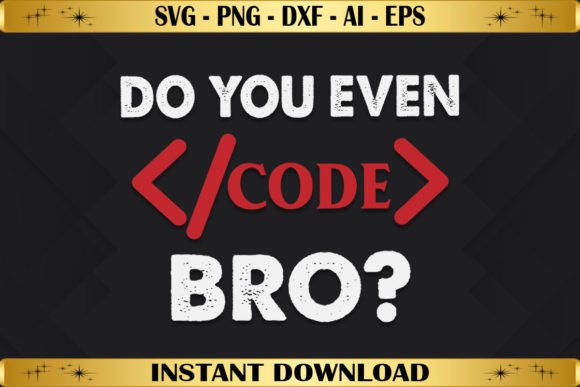
The wording is direct and a little humorous. It’s not demure or decorative. It carries a confident, slightly nerdy vibe that immediately narrows the audience. If you’re selling to developers, programmers, tech students, bootcamp grads, or even home-office coders who wear their identity proudly, this design clicks. The typography in the SVG leans toward a bold, clean style—modern enough to feel current but not so trendy that it ages fast. The phrasing could work on t-shirt designs for casual meetups, hackathons, or just a sarcastic coffee-run tee. It’s not elegant or rustic; it’s playful and bold, with a clear subculture appeal.
From a product creator’s standpoint, that niche focus is both a strength and a limit. Buyers looking for feminine craft fair designs or delicate planner stickers will scroll past. But sellers targeting a dev-centric audience or creating content around coding humor will find this asset fits naturally into their catalog. That’s the first thing I ask: does this graphic fill a real gap in my shop, or am I just adding noise? With Do You Even Code Bro, if you already serve a maker, STEM, or humor-based segment, it’s a solid addition.
Testing Across Real Product Categories
Before writing a single listing, I always run a new design through a few mockup scenarios. I’m not just checking whether it “looks nice.” I need to know how it behaves on different substrates, how the cut lines hold up for crafters, and whether the PNG renders transparent details cleanly. For this graphic, I set up test previews across several product types:
- Apparel: classic unisex tees, hoodies in dark heather, and tank tops. The bold text reads well on light and dark backgrounds, though on very dark shirts I’d recommend a version with a subtle distressed edge if the design is going for a streetwear feel.
- Mugs and drinkware: scaled down, the phrase wraps around an 11oz mug without losing legibility. The PNG file’s resolution held up fine, and the transparency around the text was clean—no white fringe.
- Printables and wall art: placed inside a simple digital frame mockup, the design turned into an amusing office printable. Pairing it with a retro pixel font for a subheading could create a quick coding-themed print.
- Tote bags and laptop sleeves: these are my favorite sleeper products for witty phrases. The design stretched minimally across a 14” tote mockup and kept its impact.
- Stickers and Cricut projects: I imported the SVG into Cricut Design Space. The letters were sharp, and the cut lines registered without manual editing. That’s critical for anyone selling digital cut files to crafters—messy nodes or broken paths kill trust fast.
When I test like this, I’m essentially building a “product simulation” in my mind. If the design fails on a mug at thumbnail size, I won’t list it there. If it looks undeniably strong on a tee, that becomes my hero listing. Do You Even Code Bro performed best on apparel, casual accessories, and simple paper prints. I would avoid shrinking it down too far for tiny sticker sheets; the lettering could get lost at very small scales, especially if printed on low-resolution sticker paper.
File Format Quality and Practical Seller Notes
The zip contains exactly what the description promises: one SVG, one PNG, one DXF, one AI, and one EPS file. For most sellers, the SVG and PNG are the immediate heavy lifters. I opened the SVG in Adobe Illustrator and Inkscape; both displayed the design without font substitution issues. That means the text was properly converted to outlines—a must for commercial use, because you can’t assume your customer owns the same typeface. The PNG had a transparent background at a resolution suitable for print-on-demand mockups. I did notice the DXF file imported into Silhouette Studio without errors, which is good for sellers who bundle physical product cut files.
One practical tip: when organizing your download package for customers, rename the files clearly before zipping. Instead of “design1.svg,” use “do_you_even_code_bro_svg.svg”—this small step reduces confusion and support messages. I also always include a simple text file with a reminder about licensing if commercial use is allowed. Since many marketplaces require that buyers know what they can sell, clarifying that upfront protects both the seller and the end customer.
Designing Listings That Convert
The phrase Do You Even Code Bro is inherently searchable among a specific crowd. When I build a listing around this asset, I don’t just rely on the design alone. I think about how the thumbnail will appear in a sea of other t-shirt designs. I test the PNG on a mockup that contrasts well—maybe a bright lifestyle shot over a blurred desk with a laptop in the background. The thumbnail needs to communicate the niche instantly. A flat image of the text might not stand out, but a mockup on a fitted tee, photographed with intentional lighting, tells a buyer immediately who this is for.
In my store, I’d pair this design with complementary graphics to create a sense of collection. For example, a bundle that includes this phrase, a curly-brace vector, a simple coding icon set, and a pixel-art pattern could become a “Code Life” design pack. Bundles often increase perceived value and bump up the average order size. Even if you only sell digital downloads, packaging related assets together as a curated set encourages buyers to purchase everything at once rather than searching for matching pieces elsewhere.
Where This Asset Works Best—and Where to Be Careful
After several mockup tests, I would confidently use Do You Even Code Bro for the following product scenarios:
- Large-scale apparel prints: The text is bold enough to dominate a shirt chest print or back print without needing extra embellishment.
- Simple wall art or office posters: Combined with a solid color background or a subtle circuit-board texture, it makes a straightforward printable that sells as an instant digital download.
- Front-of-bag prints: Canvas totes, zipper pouches, and laptop bags—any product where the message becomes a statement.
- Themed social media graphics: Bloggers or tech content creators could use the PNG to create quick promotional visuals for coding tutorials or meetup announcements.
- Craft show tabletop signage: Printed on cardstock and placed in a frame, this graphic can become a funny booth sign at an indie maker fair.
On the caution side, I would avoid using the design in these situations:
- Tiny sticker details: The lettering loses impact below about 1.5 inches wide. For sticker bundles, I’d test print cuts thoroughly—the counters inside letters like “o” and “e” can become clogged if the cut registration is off.
- Layered or highly embellished templates: In Canva templates where users overlay multiple text elements, adding this phrase could make the layout feel cluttered. Keep compositions simple to let the humor land.
- Dark-on-dark mockups: If the garment color is too similar to the print color, the design vanishes. Always provide mockup examples at strong contrast points.
- Products requiring extremely clean cut lines: While the SVG is well-built, any design with moderately thin strokes may need slight node cleanup for very intricate cutting machines. Always inspect before bundling for Silhouette or Cricut users.
How This Fits a Real Online Shop Collection
Let’s say I’m refreshing my print-on-demand shop for the fall season. I already sell a few developer humor tees, some STEM-themed wall art, and coding reference printables. Adding Do You Even Code Bro isn’t a standalone move; it’s a strategic extension of my existing catalog. When a customer lands on one of my coding t-shirts, they’ll see “You might also like” listings featuring this design. Cross-traffic works when your assets share a cohesive theme.
I’d also use this graphic as a digital product sample for a mockup kit. Showing a merchandise preview with this bold phrase instantly signals to other sellers that my mockups work well for text-heavy designs. That business-to-business angle isn’t obvious at first, but high-quality graphics can double as marketing tools when used in your own promotional materials.
Commercial Licensing and Customer Trust
Whenever I source a design for finished products, I verify that commercial use is permitted. Many sellers forget this step and then face takedown notices. With Do You Even Code Bro, confirm the license terms from the original creator before printing on merchandise or listing digital downloads. I also recommend including a plain-language summary in your shop’s product description: “Permission to use this design on physical products” helps buyers feel safe purchasing.
Trust grows when you deliver exactly what’s shown. I organize the file folder so everything is tidy: an “SVG” subfolder, a “PNG” folder with high-resolution previews, and a brief PDF explaining how to unzip and use the files. Those little touches reduce returns and questions, and they make your brand look professional.
Pairing Fonts and Building Cohesive Aesthetics
The default typography of this design is already confident. If I were to expand the product line using the same visual DNA, I’d test the phrase alongside a clean sans-serif font for product descriptions in the mockup, or pair it with a monospaced coding font for a true developer aesthetic. It also works with a slightly rounded bold font to soften the tone for younger audiences. Avoid pairing it with overly formal serif faces; that contrast can feel disjointed.
For sellers who offer Canva templates, this PNG could be dropped into a social media graphic alongside a simple code snippet background. The resulting template would appeal to coding clubs, bootcamp instructors, or tech conference organizers who want quick eye-catching visuals. The key is to keep the composition uncluttered—let the phrase do the heavy lifting.
Final Seller Checkpoints Before Going Live
When I’m ready to list, I go through a final validation routine that goes beyond “is it pretty.” I check the following:
- Thumbnail test: Resize the listing image to 250x250 pixels. Is the text still readable? If not, adjust the mockup crop.
- Print simulation: Print the design at the intended size on regular paper and view it from a typical product distance. I hold a mug printout at arm’s length, or tape a t-shirt print to an actual shirt and stand a few feet away.
- Cross-background preview: Place the PNG on a pure white background and a pure black background. Check for weird artifacts or transparency issues.
- Node inspection: For SVG files, open in outline mode and look for stray nodes or broken paths. This takes two minutes but saves hours of customer support.
- Bundle compatibility: If I plan to include the design in a larger pack, I verify it exports cleanly alongside other elements without scaling conflicts.
Do You Even Code Bro passed all these checks in my workflow. It’s not a design for every shop, but for the right niche it becomes a reliable, repeat seller. The included file formats—SVG, PNG, DXF, AI, EPS—cover nearly every use case a digital creator or crafter could need. With proper mockup presentation, clear licensing, and careful product selection, this graphic can earn its place in a commercial product collection without requiring a lot of extra effort.
For Etsy sellers and print-on-demand entrepreneurs looking to test a bold, niche-specific phrase, this design is ready to download, print, and list. Just remember: test it on your own mockups first, pair it with complementary items in your shop, and always keep the cutting-machine user in mind if you’re marketing to crafters. The result is a straightforward asset that does exactly what it promises—and that kind of reliability translates directly into sales.