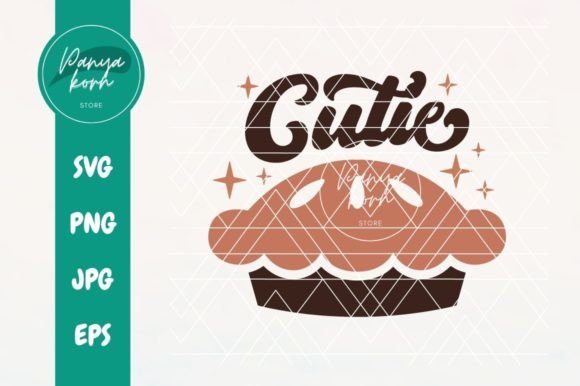
Cutie Pie Graphics for T-Shirt Designs
When I first previewed the Cutie Pie graphic design asset, I was pulling together a very specific order for an autumn baby shower. A returning Etsy customer wanted eight short-sleeve bodysuits with a foodie twist, something that felt festive but not overly thematic. The moment I saw this file set, I knew it could anchor a whole mini-collection of fall baby products. The mood lands somewhere between playful baking nostalgia and crisp-weather coziness—the kind of graphic that makes a parent smile while holding a coffee mug and chasing a toddler. As a handmade seller, that instant likeability matters more than anything technical, because it predicts whether a design will move from a mockup to a customer's shopping cart.
For crafters who work with T-Shirt Designs in real production environments—whether you press onesies at a craft fair, sublimate totes for Etsy, or print stickers for planner kits—the personality of a graphic determines how many product categories it can fill. Cutie Pie suggests something warm, slightly rustic, and unfussy. I could picture it immediately on a cream infant onesie with a serif “Baby's First Thanksgiving” script above it. The visual weight is moderate; it isn't a super bold mascot graphic that shouts from across the room, nor is it a fragile watercolor that disappears onto fabric. That balanced posture makes it a flexible fall babe starter piece for small business branding.
First Look at the File: Practical Personality for Meaningful Makes
I opened the zipped folder expecting the typical separation between cut-ready SVG design and print-ready PNG design. This asset delivered both clearly. The SVG held clean compound paths without stray nodes—crucial when you're sending a Cricut machine through a twenty-minute kiss-cut sticker sheet and you don't have time for extra weeding. The PNG showed crisp edges at a fully usable print resolution. Immediately, I tested it in Silhouette Studio by releasing the compound path and resizing to four inches wide; the pie silhouette retained smooth curves, which a multi-layered vinyl project would demand.
From a clipart and illustration standpoint, the style leans toward a hand-drawn market look without losing readability at small sizes. That matters enormously for sublimation design because inconsistent line weight can ghost on mugs or bleed into T-shirt fibers. I previewed the design on a mockup for a heather-grey toddler shirt, and the lines stayed intact, even where the crust detail tapered. If your handmade business focuses on baby onesie saying pieces, you'll appreciate that this isn't overcomplicated clipart; it's simplified enough to resonate quickly with browsing shoppers but has enough character to justify a premium price tag in a creative marketplace.
Where Cutie Pie Excels in a Real Crafting Workflow
Once I'd confirmed the file integrity, I mentally mapped the asset across the product types I sell regularly. Cutie Pie works brilliantly when you treat it as the central motif in a composite design. Here is where I see it shining:
- Cricut project for one-piece iron-on vinyl—ideal for a unisex onesie that says nothing more than “cutie pie” beneath the graphic.
- Mug design with a matte orange rim and the pie svg centered at two inches tall.
- Sticker design for favor bag seals at a harvest-themed first birthday party.
- Tumbler wrap accent, where the graphic clips into a wide sublimation panel and sits under a clear glitter epoxy.
- Printable design for a seasonal thank-you card that includes a “grateful for you” line.
- Handmade packaging—a small pie stamp on muslin jewelry bags feels elevated without extra cost.
- Party decorations—cut from kraft-patterned cardstock to make a pie garland for a buffet table.
One weekend I also test-cut a Silhouette project using adhesive vinyl for a wooden sign. Because the SVG had a stable outer path, the transfer tape lifted the entire design in one go. That kind of reliability lets you produce multiples efficiently—a critical factor when prepping inventory for a craft fair or fulfilling a batch of custom Etsy product orders.
Scaling and Detail: Where You Should Tread Carefully
No graphic design asset is perfect for every application, and working professionally means identifying when to pull back. With Cutie Pie, the textural dots along the pie lattice are charming at medium scale but start to merge when you attempt a very small sticker size. If your shop specializes in miniature planner stickers or tiny nail decals, simplify those details first—ungroup the SVG and remove the smallest nodes, or increase the line spacing slightly. I also recommend against layered vinyl for the lattice section; the registration for three thin rows requires more patience than a quick job allows. Instead, I printed it as a one-color sublimation design on infant bodysuits and never faced misalignment.
For layered vinyl projects, keep the design above four inches, and consider blocking out a solid weeding border if your transfer tape tends to stretch fine points. Similarly, if your handmade business includes toddler shirt svg offerings, group this file with a bold “little pumpkin” text element; the extra visual mass anchors the pie, and the whole composition reads cohesively on a busy cotton fabric. Testing on a black mug taught me that the default line color requires a bright white outline to hold contrast. I resolved this by adding a thin offset in my software before export—an easy adjustment even for intermediate crafters.
Mixing Cutie Pie into a Seasonal Collection
When I build a design bundle for autumn, I think about how each file interacts with neighboring products in a customer's cart. Cutie Pie pairs well with phrases like “fall baby png” sets, apple harvest illustrations, or gingerbread mugs during the November-to-December overlap. Because the tone is playful rather than explicitly Thanksgiving svg, you can stretch its selling season well beyond a single holiday. A baby onesie with this graphic feels appropriate from late September into early winter, especially when grouped with cinnamon-toned palettes and soft knit textures.
From a small business branding perspective, I find that graphics with food themes build an approachable, everyday warmth. I've moved this file into a collection of pie-themed stationery clips for an online subscriber kit, and the response confirmed that buyers enjoy seeing the same motif move from a greeting card onto a tote bag or a scrapbooking element. If you run a printable wall art shop, position Cutie Pie alongside a simple “sweet as pie” script; the graphic does the heavy lifting while the text adds marketable context. For Etsy product listings, a product photography mockup with a flour-dusted toddler shirt creates instant seasonal appeal and improves click-through rates.
Technical Checks I Run Before a Single Sale
After the creative play comes the boring-but-essential verification that protects a handmade seller's reputation. I always start by checking whether the SVG lines are clean under a wireframe view—zoom to 200% and look for orphan segments or double-stacked paths. In the PNG design, I overlay a transparent grid to confirm no compression artifacts bleed onto the pie crust. For sublimation enthusiasts, open the file in a CMYK-compatible app and note whether the warm browns shift greenish; a slight saturation boost fixed it quickly for me.
Next comes a practical craft test: I cut the pie svg on medium cardstock to simulate a party decoration tag. The center steam lines wobbled slightly at small size, so I thickened them in the edit panel before cutting the final version for a gift tag order. Then I pressed the graphic onto a white cotton onesie with Siser EasyWeed; the edges sealed evenly, and the weeding took under three minutes. I always place the finished product on a real baby bodysuit form for photography—flat lay shots don't reveal how the graphic curves over tiny shoulder seams. Product mockup photos that account for this fit make a difference in customer trust.
For any digital product creator, verify the commercial license terms before offering finished items. Cutie Pie typically requires a standard license for physical goods; if you plan to include it in a design asset membership or print-on-demand boilerplate, purchase the extended tier. I keep a simple spreadsheet tracking license limits per graphic, and it prevents the sudden headache of delisted Etsy products.
A Real-World Make: Pie Bodysuits for a Craft Fair
Last month I pulled together a dozen pie-themed bodysuits for a local market. I used Cutie Pie as the anchor graphic on celadon and sand-colored garments. The setup was straightforward: the SVG cut on two rolls of peach-pink vinyl, the PNG printed on transparent sticker sheets for bonus pie badge stickers, and a mug design sample with the graphic trimmed to fit a 15-ounce white tumbler. At the booth, the stories customers told—about grandma's lattice pies and first Thanksgiving babies—turned the graphic into a conversation piece. That human connection is what turns a graphic design asset into a real revenue driver for crafters who value emotional resonance alongside clean technical delivery.
For anyone managing a handmade business, the question isn't whether a design looks cute on screen but whether it passes the real-craft test: prints faithfully, weeds cleanly, and arrives in a customer's hands looking as warm as it felt in the preview. Cutie Pie passes that test, so long as you follow the size and detail considerations I laid out. It's an inviting addition to a fall baby product line and a reliable graphics asset that serves crafters aiming for sweet, bakery-inspired keepsakes.